
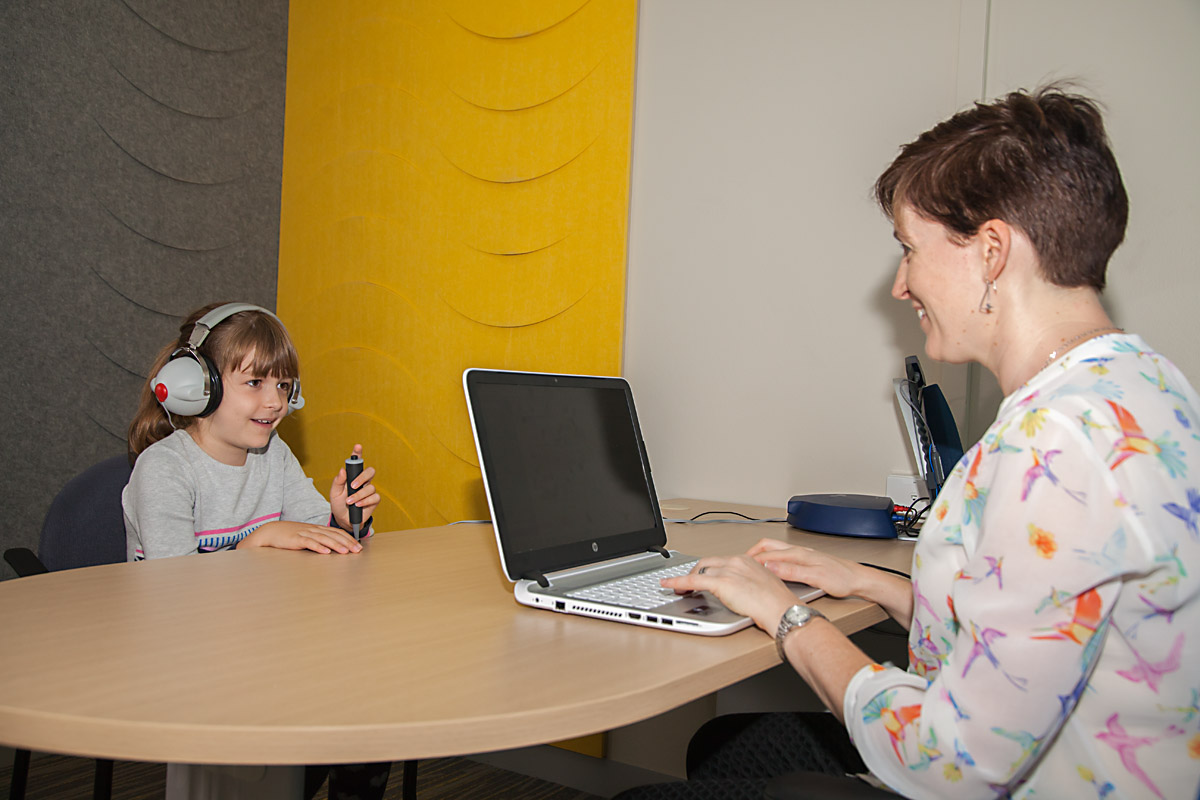
Attention difficulties, language disorders, learning challenges, and auditory processing problems can all look very similar in everyday life. So, how can you be sure you are testing Auditory Processing and not something else?
When children struggle to listen in class, follow instructions, or cope in noisy environments, parents and teachers are often told the problem may simply be attention. This is one reason Auditory Processing Disorder (APD) has been debated for many years. Attention difficulties, language disorders, learning challenges, and auditory processing problems can all look very similar in everyday life.
A child who misses instructions, seems distracted, or frequently says “what?” may have trouble paying attention — but they may also be struggling to process sound efficiently. Listening is a complex brain function, and attention always plays some role. Because of this overlap, some professionals have questioned whether auditory processing can truly be assessed separately from attention and memory. Modern auditory processing assessments try to answer this question by using a range of carefully designed tests that examine different listening skills while reducing the influence of language, attention, and memory as much as possible. This approach is looking to diagnose the specific listening deficit the child is experiencing by looking at difference scores between subtests, therefore reducing the impact of attention, memory or language on the final scores. Clinicians also compare how children perform across different types of tasks.
One important area assessed is dichotic listening. In dichotic listening tests, different words or numbers are presented to each ear at the same time through headphones. The child will be asked to repeat everything they hear in one subtest, and focus on only one ear in other subtests. By looking at the difference scores, it is easier to see if there is a memory or attention deficit impacting the results. These tests examine how efficiently the brain integrates competing auditory information from both ears. Dichotic listening tasks are important because classrooms are full of competing sounds. Children constantly need to focus on one voice while ignoring others. A child with auditory processing difficulties may struggle when the brain has to separate and organise competing speech signals.
Another key area is spatial processing, which refers to the brain’s ability to use location cues to separate speech from background noise. In everyday life, this is what helps us focus on one speaker in a busy room. Spatial processing can be assessed using the LISN-S (Listening in Spatialised Noise – Sentences) test, developed at the National Acoustic Laboratories. In this test, children listen to simple sentences while competing voices are presented from different virtual locations through headphones. The test measures whether the child can use differences in direction and voice characteristics to improve speech understanding in noise. This is particularly valuable because the task places relatively low demands on language and memory. The sentences are simple, responses are brief, and the listening conditions are tightly controlled. A child with poor spatial processing may genuinely struggle to separate speech from noise even when attention is adequate. Parents often describe these children as coping reasonably well in quiet one-on-one situations but becoming lost in busy classrooms, playgrounds, group discussions, or sports activities where multiple voices compete.
A third important area is auditory memory. This refers to the ability to retain and recall information that has been heard. Auditory memory difficulties can sometimes mimic APD because children may appear not to listen when in fact they heard the information correctly but could not hold it in memory long enough to act on it.For example, a child may accurately hear the instruction: “Get your maths book, pencil case, and homework folder,” but only remember the first item by the time they reach their desk. Longer or more complex verbal information places increasing demands on working memory. A child with auditory memory weakness may perform normally on basic auditory perception tasks but struggle as memory load increases.
Modern APD assessment therefore does not attempt to completely separate listening from attention or memory — because all of these systems work together. Instead, the goal is to determine whether a child shows specific auditory weaknesses beyond what would be expected from attention or memory difficulties alone. This approach helps ensure that children receive the right support. Some may benefit from classroom amplification systems, improved acoustic environments, listening strategies, or auditory training, while others may need support for attention, language, or working memory.
Pittwater Hearing provides comprehensive auditory processing assessments using evidence-based tools including dichotic listening testing, spatial processing assessment such as the LISN-S, auditory memory evaluation and tests of pitch pattern recognition. Following the assessment, tailored rehabilitation programs can be developed to target the child’s specific areas of difficulty.
Rehabilitation may include an online Auditory Training program designed and validated to remediate the specific deficit diagnosed, classroom listening strategies, teacher recommendations, environmental modifications, and remote microphone technology. Importantly, assessment outcomes can also help guide referrals to other professionals where attention, language, or learning difficulties are contributing significantly to the child’s challenges. By identifying the underlying causes of listening difficulties, children can receive more targeted support, improving not only academic performance but also confidence, participation, and social engagement.